

Integrated Logistics Programs Built for Operational Control.
NPT combines warehousing, managed capacity, dedicated contract operations, and project-specific execution into one coordinated operating model. The result is better service continuity, tighter cost governance, and cleaner handoffs from planning through delivery.
Warehousing & Distribution | Inventory Positioning, Fulfillment, and Controlled Outbound Execution
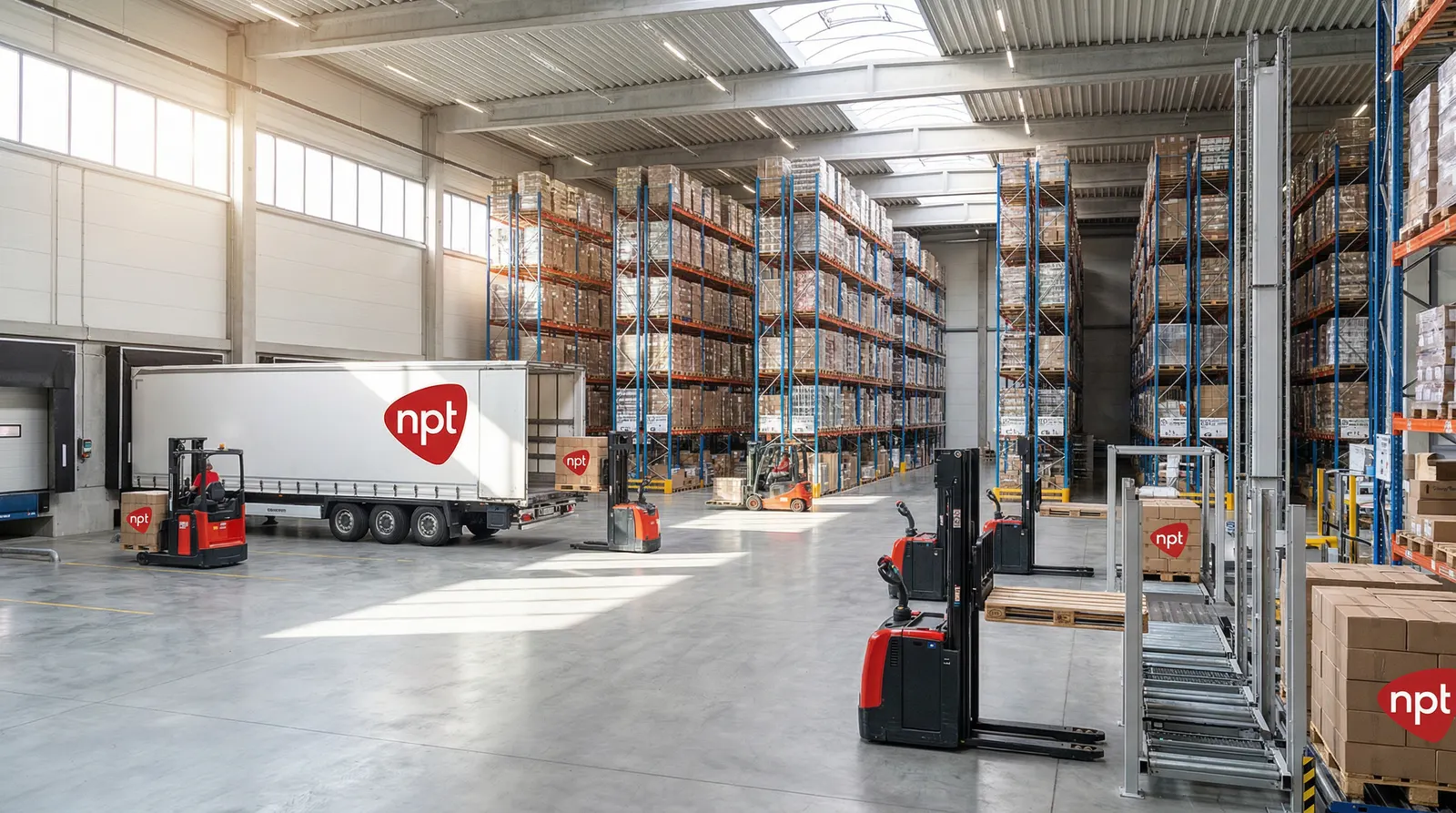
Warehousing and distribution programs are designed to convert inventory into reliable outbound performance. We align receiving, storage, order processing, and shipping workflows to support accuracy, cycle-time consistency, and customer service-level commitments.
Technical Specs
- Length
- Order cycle and lead time from receipt to ship
- Width
- SKU breadth, lane count, and channel mix
- Height
- Peak throughput and storage profile
- Max Freight Weight
- Volume and weight profile for labor and equipment
- Pallet Capacity
- Unit handling, pallet types, and slotting needs
Program design depends on volume, SKU profile, and SLA targets; confirm scope with our distribution team.
Warehousing & Distribution Fit Guide
Warehousing and distribution fit when inventory positioning and fulfillment performance directly support customer commitments. This guide helps determine if a warehousing program is the right fit for your operation—and what to use instead when it isn't.
Transport-only or ad-hoc storage needs
If you need freight movement without ongoing inventory or fulfillment, truckload, LTL, or managed capacity may fit better.
Dedicated equipment and lane commitment
If the priority is committed capacity and lane-level consistency rather than warehouse operations, dedicated/contract is a better fit.
Oversize or project cargo with route/permit focus
If the move is project or oversize with route, permit, and site coordination as the main need, project-specific programs are designed for that.
How to use this Service
Here's how to use NPT's Warehousing & Distribution from program design to go-live.
- Share SKU profile, velocity segmentation, and storage constraints so we can size space and labor.
- Define inbound schedule, receiving standards, and put-away expectations for consistent handoffs.
- Specify order rules, cutoffs, wave strategy, and carrier routing logic so outbound matches your SLA.
- Set SLA targets for pick accuracy, ship timeliness, and exception handling so we can govern to them.
- Confirm reporting and review cadence so throughput, accuracy, and variance stay visible.
Operational Coverage & Service Standards
Capabilities focus on inventory integrity, outbound consistency, and scalable operations.
- Receiving, storage, pick-pack-ship, and outbound coordination
- Inventory controls with cycle count and variance management support
- Returns and value-added handling workflows as program needs require
- Performance reporting for throughput, accuracy, and SLA adherence
Get pricing and capacity for this mode
Share your lane requirements and we will return a structured quote with equipment fit, timing expectations, and operating assumptions.
- Inventory and order workflow governance
- Outbound SLA monitoring and exception control
- Scalable throughput planning for variable demand
Warehouse operations are governed through defined SOPs, receiving discipline, and outbound control to protect delivery commitments.
- Order and inventory disciplineInventory control and fulfillment workflows are aligned to reduce errors and rework.
- Operational visibilityInbound, storage, and outbound status signals support faster decisions across teams.
- Scalable throughput planningCapacity and labor rhythm are tuned for peak periods and variable demand.
Managed Capacity | Procurement, Planning, and Continuous Transportation Optimization
Managed capacity programs centralize transportation planning, procurement, execution oversight, and performance management. We align carrier strategy, routing decisions, and exception workflows to improve service reliability while controlling total transportation cost.

Technical Specs
- Length
- Lane count and geographic scope
- Width
- Mode mix and carrier strategy breadth
- Height
- Volume and peak demand profile
- Max Freight Weight
- Cost and service KPI targets
- Pallet Capacity
- Shipment profile and accessorial exposure
Scope and savings depend on lane data and governance commitment; our team will size during assessment.
Managed Capacity Fit Guide
Managed capacity fits when transportation planning, procurement, and performance need to be centralized and governed. This guide helps determine if a managed program is the right fit—and what to use instead when it isn't.
Warehouse and fulfillment are the primary need
If inventory positioning and outbound fulfillment are the main focus, warehousing and distribution is the right program.
Committed dedicated capacity per lane
If you need embedded equipment and staffing for recurring lanes, dedicated/contract programs provide that commitment.
Single project or oversize move
If the need is one-off project or oversize with route and permit focus, project-specific programs are designed for that.
How to use this Service
Here's how to use NPT's Managed Capacity from assessment to steady-state governance.
- Share current carrier mix, lane map, and mode profile so we can baseline and identify gaps.
- Define service-level targets and key failure/exception patterns so priorities are clear.
- Provide cost baseline including accessorial and expedite drivers for improvement tracking.
- Set governance cadence, reporting expectations, and stakeholder owners so we operate in rhythm.
- Confirm KPI and continuous-improvement process so lane and mode decisions stay data-led.
Operational Coverage & Service Standards
Managed capacity capabilities combine execution support with strategic control.
- Carrier procurement and lane strategy support
- Routing and mode optimization for service/cost balance
- Exception management workflows and escalation protocols
- Performance dashboards and recurring continuous-improvement reviews
Get pricing and capacity for this mode
Share your lane requirements and we will return a structured quote with equipment fit, timing expectations, and operating assumptions.
- Carrier and lane strategy aligned to KPIs
- Cost and service optimization cadence
- Structured escalation for network exceptions
Managed capacity works best when data, carrier strategy, and operations governance are integrated into a repeatable rhythm.
- Unified operating modelPlanning, execution, and carrier coordination run through one accountable workflow.
- KPI-led performance governanceOn-time service, cost variance, and exception patterns are actively managed.
- Continuous improvement cadenceLane and mode decisions are refined using recurring performance reviews.
Dedicated / Contract Programs | Embedded Capacity and Service-Level Accountability
Dedicated and contract logistics programs provide predictable capacity and operating discipline for recurring freight demand. We structure staffing, equipment, and workflow governance around committed service outcomes and lane-level consistency.

Technical Specs
- Length
- Lane commitment and service windows
- Width
- Equipment mix and coverage breadth
- Height
- Peak volume and seasonal swing
- Max Freight Weight
- Service and cost KPI targets
- Pallet Capacity
- Shipment profile and handling requirements
Program structure depends on volume, lane stability, and service targets; our team will design during consultation.
Dedicated / Contract Fit Guide
Dedicated and contract programs fit when recurring volume and service criticality justify committed capacity and operating discipline. This guide helps determine if dedicated/contract is the right fit—and what to use instead when it isn't.
Planning and procurement focus without committed equipment
If you need centralized planning and carrier governance without dedicated fleet, managed capacity is the right fit.
Warehouse and fulfillment as primary need
If inventory and outbound fulfillment are the core need, warehousing and distribution is designed for that.
One-off project or oversize with route/permit focus
If the move is project or oversize with route, permit, and site coordination as the main need, project-specific programs are the right fit.
How to use this Service
Here's how to use NPT's Dedicated / Contract programs from design through launch and steady state.
- Share volume profile by lane, seasonality, and peak-period requirements so we can size capacity and labor.
- Define target service metrics and escalation protocol definitions so accountability is clear.
- Set resource model expectations for staffing and operational ownership so roles are aligned.
- Establish review cadence, performance reporting, and continuous-improvement process so we govern to outcomes.
- Confirm proof-of-delivery and exception workflows so day-to-day execution stays consistent.
Operational Coverage & Service Standards
Dedicated/contract capabilities focus on consistency, accountability, and measurable outcomes.
- Program design around recurring freight requirements
- Service governance with KPI tracking and escalation controls
- Embedded operations support for daily execution continuity
- Structured improvement plans tied to cost and service objectives
Get pricing and capacity for this mode
Share your lane requirements and we will return a structured quote with equipment fit, timing expectations, and operating assumptions.
- Committed resource model with SLA accountability
- Recurring lane governance and performance reviews
- Reduced volatility through embedded execution
Contract programs work when accountability, service governance, and stakeholder cadence are defined from day one.
- Committed operating structureCapacity and execution roles are aligned to recurring demand patterns.
- SLA-oriented delivery modelProgram performance is governed through explicit service and communication standards.
- Reduced volatility exposureDedicated coverage lowers disruption risk in constrained or variable markets.
Project-Specific (Oversize) Programs | Route, Permit, and Multi-Party Execution Control
Project and oversize programs require engineering-grade planning, permit governance, route validation, and synchronized stakeholder execution. We coordinate each handoff from pre-move analysis through final delivery to reduce schedule and compliance risk.

Technical Specs
- Length
- Load dimensions and route clearance requirements
- Width
- Jurisdiction and permit scope
- Height
- Site and equipment constraints
- Max Freight Weight
- Axle and bridge limits
- Pallet Capacity
- Handling points and sequence dependencies
Feasibility and cost depend on route, permit lead times, and site constraints; confirm with our project team.
Project-Specific (Oversize) Fit Guide
Project and oversize programs fit when route, permit, and multi-party execution risk cannot be managed transactionally. This guide helps determine if a project-specific program is the right fit for your move—and what to use instead when it isn't.
Standard dimensions and no special permits
If freight fits standard equipment and does not require oversize permits or route engineering, truckload or LTL is typically more efficient.
Recurring lane demand with committed capacity
If you need ongoing dedicated capacity on recurring lanes, dedicated/contract programs are designed for that.
Transport planning without warehouse or project cargo
If the need is centralized planning and carrier governance without project or oversize moves, managed capacity may fit better.
How to use this Service
Here's how to use NPT's Project-Specific (Oversize) programs from feasibility through delivery.
- Share load specs including dimensions, weight, and handling points so route and permit planning can start.
- Define origin/destination site constraints and equipment requirements so handoffs are planned up front.
- Specify jurisdictional permit needs, route limitations, and timing windows so compliance is sequenced.
- Provide stakeholder map and escalation owners for execution exceptions so we coordinate from one plan.
- Confirm milestone and proof-of-delivery expectations so schedule and compliance risk stay controlled.
Operational Coverage & Service Standards
Project capabilities are built around risk control and reliable sequence execution.
- Route and permit planning with compliance-aligned sequencing
- Coordination across carrier, site, and regulatory stakeholders
- Execution governance with milestone checkpoints and escalation
- Contingency planning for weather, permit, and route disruptions
Get pricing and capacity for this mode
Share your lane requirements and we will return a structured quote with equipment fit, timing expectations, and operating assumptions.
- Engineering-grade route and permit planning
- Multi-stakeholder milestone control
- Contingency design for schedule-risk events
Complex freight succeeds when engineering details, compliance tasks, and field execution stay synchronized under one control model.
- Front-loaded feasibility planningDimensions, route constraints, and jurisdiction requirements are validated before movement.
- Permit and route governanceJurisdiction sequencing and travel constraints are managed proactively.
- High-control stakeholder coordinationOperations, site teams, and compliance participants work from one coordinated plan.

Talk to our experts and design the right logistics operating model.
Get program guidance on warehousing, managed capacity, dedicated operations, and project execution.