
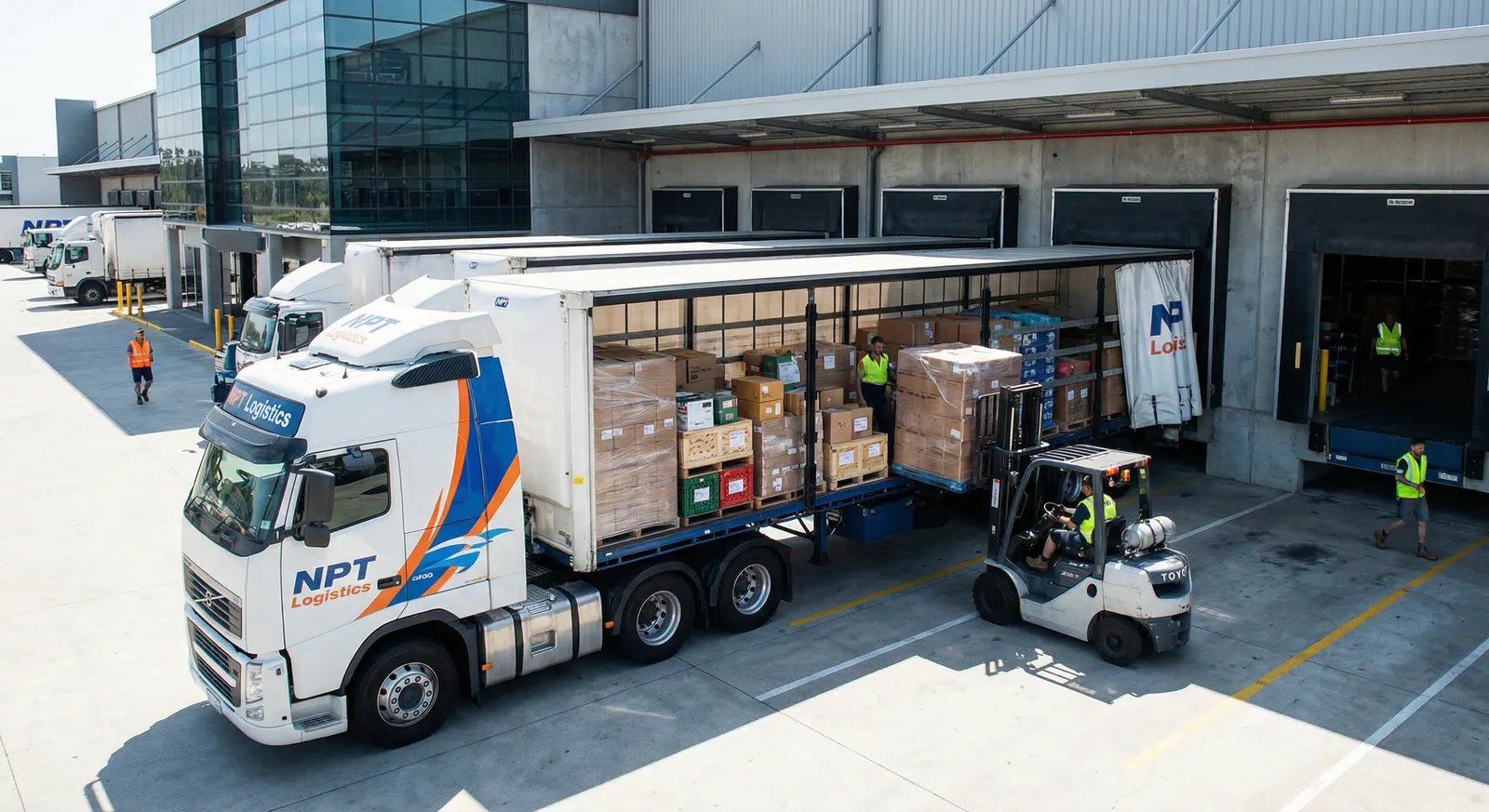
LTL Freight Built for Cost Efficiency and Delivery Reliability.
NPT designs LTL execution around consolidation efficiency, shipment handling discipline, and delivery-window reliability. We help shippers balance cost and service through lane-fit planning, class-ready quoting, and proactive exception management.
Consolidation efficiency, handling control, and delivery visibility for recurring shipment programs.
LTL Freight Built for Cost Efficiency and Delivery Reliability.
NPT designs LTL execution around consolidation efficiency, shipment handling discipline, and delivery-window reliability. We help shippers balance cost and service through lane-fit planning, class-ready quoting, and proactive exception management.
Technical Specs
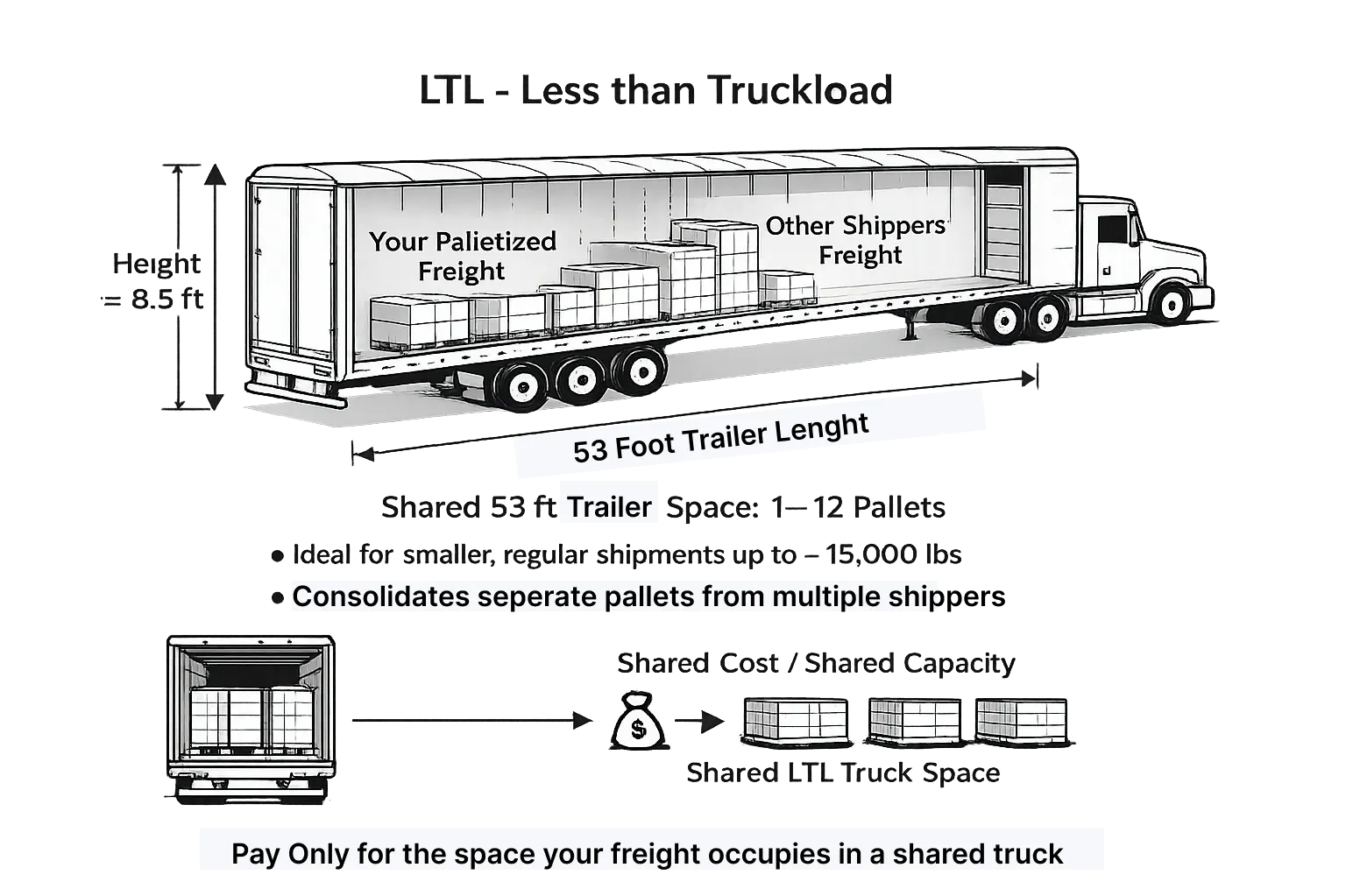
- Length
- Multi-stop; trailer shared across shipments
- Width
- Standard dock and pallet dimensions
- Height
- Standard trailer clearance; stackable freight
- Max Freight Weight
- Per-shipment; typically under 15,000 lbs for LTL efficiency
- Pallet Capacity
- Typically 1–12 pallets; more may justify truckload
Planning values only. Lane density, class, and service levels affect fit; confirm with your LTL specialist.
LTL Freight Fit Guide
LTL is built for shipments that do not require a dedicated trailer. This guide helps determine if LTL is the right fit for your load—and what to use instead when it isn't.
Full truckload volume
If your shipment consistently fills 12+ pallets or 15,000+ lbs and fits a single trailer, dedicated truckload is usually more efficient.
Freight requiring temperature control
If your cargo must remain within a controlled temperature range.
Open-deck or oversized freight
If your freight requires flatbed, step deck, or RGN equipment due to dimensions or handling.
Long-haul lanes with cost focus
If your lane is long-haul and cost optimization is a priority, truckload may offer better economics.
When to use this service
LTL is the right fit when shipment volume does not require dedicated trailer capacity.
- Frequent palletized shipments below full truckload volume
- Multi-stop distribution where cost efficiency is a priority
- Programs balancing service targets against transportation spend
- Lanes where consolidation does not compromise required transit windows
Plan your LTL lane strategy with our team
Share your shipment profile and lane priorities to receive a structured LTL execution plan.
- Quote response with lane-fit assumptions
- Service/cost tradeoff guidance
- Clear exception and communication model
How to use this Service
Here's how to use NPT's LTL service from quote to delivery.
- Share origin, destination, and shipment profile (pallet count, weight, dimensions, class) so we can provide class-ready quotes.
- Provide pickup and delivery windows and any facility or appointment constraints so we can plan routing.
- Specify handling requirements, accessorials, and documentation needs (BOL, POD) for clean execution.
- Confirm service-level expectations and exception communication preferences so we can meet your targets.
- Include reference numbers and billing instructions for accurate closeout and invoicing.
- Clarify contingency for reclass, delay, or accessorial events so we can respond consistently.
Operational Coverage & Service Standards
LTL capabilities focus on predictability, cost control, and disciplined shipment handling.
- Regional and cross-border LTL support across North American lanes
- Class/handling-ready quoting workflow to reduce avoidable rework
- Service-level aligned routing and carrier selection support
- Milestone visibility and structured exception communication
Get pricing and capacity for this mode
Share your lane requirements and we will return a structured quote with equipment fit, timing expectations, and operating assumptions.
- Quote response with lane-fit assumptions
- Service/cost tradeoff guidance
- Clear exception and communication model
LTL outcomes improve when shipment profile, facility constraints, and service expectations are defined before tender. We validate class and handling up front and align communication to your program.
- Consolidation efficiencyLane-fit planning and carrier selection aligned to cost and service targets—built for predictable LTL execution.
- Class and handling disciplineClassification and handling inputs validated at intake to reduce rework, reclass, and accessorial surprises.
- Milestone visibilityPickup, in-transit, and delivery updates aligned to decision points so exceptions are caught early.

Talk to our experts and optimize your LTL program.
Get practical guidance on shipment profile, lane fit, and service-level targets.