
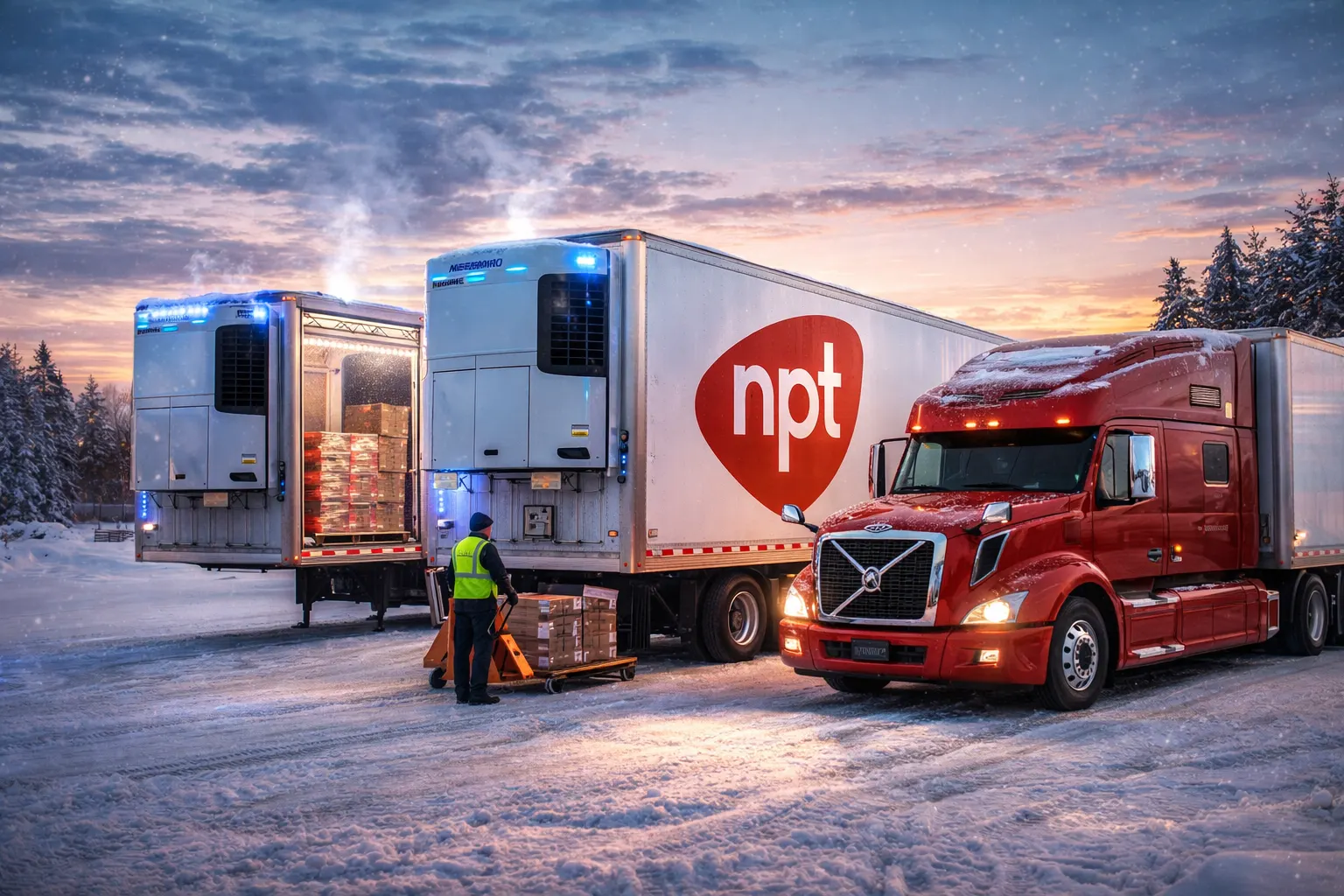
Temperature-Controlled Logistics Built for Setpoint Integrity and Delivery Confidence.
NPT runs temperature-controlled shipments with operational discipline across equipment readiness, transit monitoring, and exception response. We help shippers protect product integrity across heat- and cold-sensitive lanes while meeting strict delivery commitments.
Setpoint governance, monitoring visibility, and proactive response for temperature-sensitive freight.
Temperature-Controlled Logistics Built for Setpoint Integrity and Delivery Confidence.
NPT runs temperature-controlled shipments with operational discipline across equipment readiness, transit monitoring, and exception response. We help shippers protect product integrity across heat- and cold-sensitive lanes while meeting strict delivery commitments.
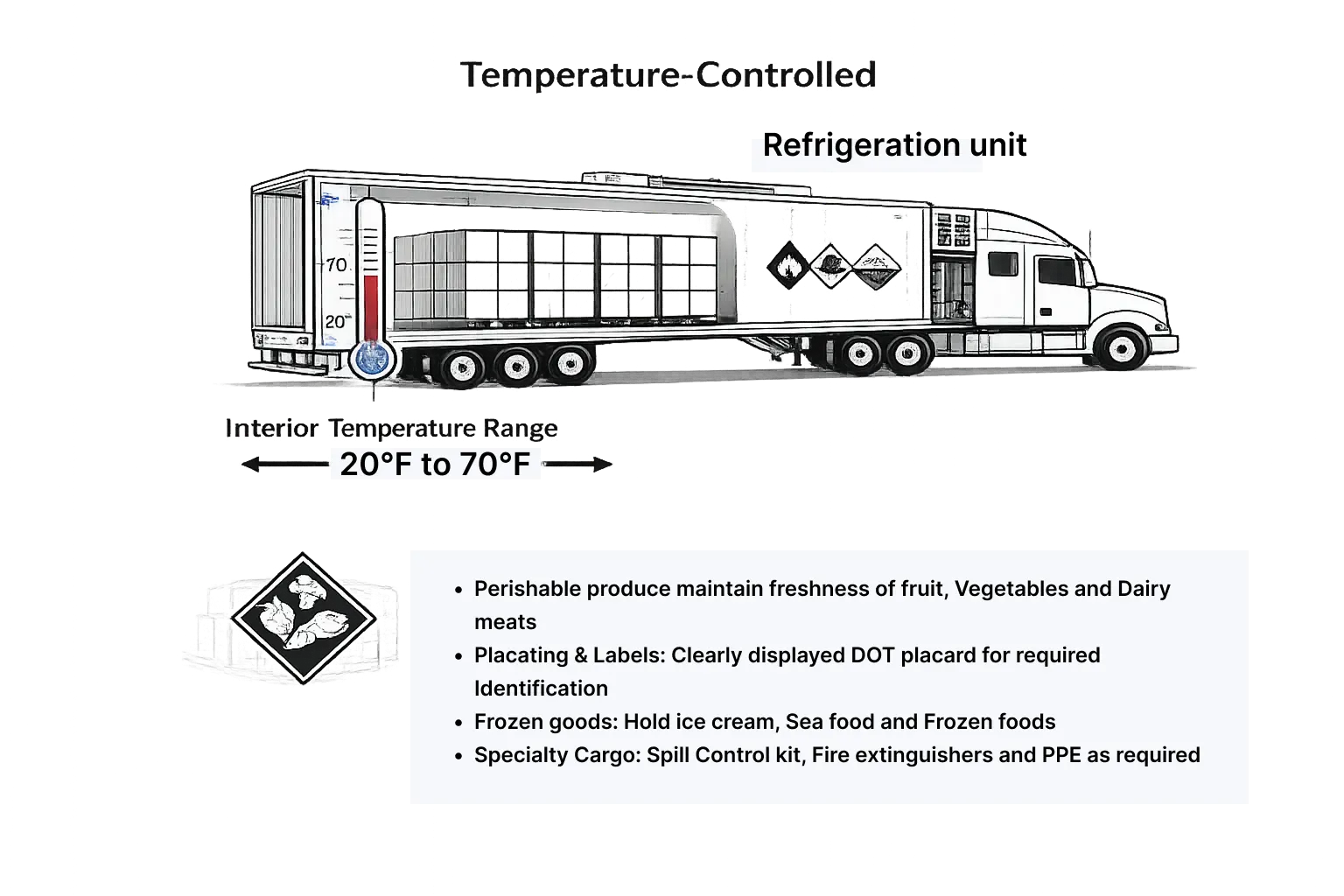
Technical Specs
- Length
- Temperature-controlled trailer; 48 ft or 53 ft typical
- Width
- Standard temperature-controlled width; dockable
- Height
- Interior clearance; temperature management and airflow considered
- Max Freight Weight
- Legal payload; typical temperature-controlled capacity
- Pallet Capacity
- Varies by trailer and load configuration; typically 24–26 pallets in a 53 ft temperature-controlled trailer
Setpoint and equipment fit depend on commodity, lane, and receiver requirements; confirm with our temperature-control team at quote.
Temperature-Controlled Freight Fit Guide
Temperature-controlled service is for cargo whose quality or compliance depends on maintaining a defined thermal range in transit. This guide helps determine if temperature-controlled is the right fit for your load—and what to use instead when it isn't.
Non-temperature-sensitive freight
If your cargo does not require a controlled temperature range in transit, dry van is usually more economical.
Small or LTL-volume temperature shipments
If your temperature-sensitive shipment is below full truckload volume, LTL temperature-controlled may be a better fit.
Hazardous materials with compliance requirements
If your freight is regulated as hazardous and requires documentation and handling controls in addition to temperature.
Expedited non-temperature-critical freight
If timing is the priority and your cargo does not require strict thermal control, expedited service may be more appropriate.
When to use this service
Use temperature-controlled service when cargo quality is directly dependent on thermal conditions during transit.
- Food and beverage shipments requiring strict temperature maintenance
- Pharma or healthcare lanes with validated thermal thresholds
- Seasonal products at high risk of temperature-related variance
- Programs with strict receiver requirements for temperature compliance
Design the right temperature-control execution plan
Share commodity profile and lane requirements to receive a structured temperature-control strategy.
- Setpoint and handling-fit quote guidance
- Risk-control workflow recommendations
- Milestone and exception communication model
How to use this Service
Here's how to use NPT's Temperature-Controlled service from quote to delivery.
- Share required setpoint range, commodity sensitivity, and any validated thermal thresholds so we can confirm equipment and protocol.
- Provide origin and destination details and receiver temperature-compliance requirements for planning.
- Specify pre-load expectations (pre-cool, load conditions) and in-transit visibility needs so we can align to your program.
- Give reference numbers and documentation expectations for delivery closeout and quality records.
- Include exception and escalation preferences for out-of-range or delay events so we can respond consistently.
- Confirm delivery sign-off and thermal-condition confirmation process so we can meet your integrity standards.
Operational Coverage & Service Standards
Capabilities are focused on product integrity, delivery reliability, and operational control.
- Temperature-controlled lane execution across North America
- Setpoint governance and temperature-control handling protocol support
- Milestone visibility and early exception communication
- Delivery closeout process aligned to quality-sensitive programs
Get pricing and capacity for this mode
Share your lane requirements and we will return a structured quote with equipment fit, timing expectations, and operating assumptions.
- Setpoint and handling-fit quote guidance
- Risk-control workflow recommendations
- Milestone and exception communication model
Temperature-sensitive programs perform best when setpoint discipline, pre-load readiness, and escalation rules are defined before movement. We align equipment and communication to your thermal and delivery requirements.
- Setpoint and profile disciplineWe align thermal requirements and commodity profile at intake so equipment and handling protocol match your product.
- Monitored transit and visibilityMilestone checkpoints and exception communication are built for time- and temperature-sensitive programs.
- Controlled exception responseOut-of-range or delay events trigger defined escalation so exposure is minimized and recovery stays on protocol.

Talk to our experts and strengthen your temperature-control execution model.
Get practical guidance on setpoints, lane planning, and exception response controls.